1. What is Adolescence?
According to the World Health Organization (WHO) definition, an adolescent is any person between ages 10 and 19. This is the period of transition between childhood to adulthood. It is a period when rapid physiological changes and demands for new social roles takes place. The adolescents, due to these changes often face a number of crises and dilemmas.
2. What are the mental changes during puberty?
Mental changes that may occur during puberty:
– One becomes inquisitive about things unknown and unfamiliar
– Confusion, hesitation and shyness become pervasive in movement and daily activities
– One feels the urge to be independent or egalitarian
– The urge for attention and love of the dear and near ones become intense
– The girls and boys feel attraction towards each other
– The tendency to be moved by emotion becomes dominant and strong
– The stage of mental maturity starts.
3. What is menstruation? What should be done during this time?
Menstruation, also known as a period or monthly,is the regular discharge of blood and mucosal tissue (known as menses) from the inner lining of the uterus through the vagina. The first period usually begins between twelve and fifteen years of age, a point in time known as menarche. However, periods may occasionally start as young as eight years old and still be considered normal.
During menstruation it is necessary to keep very clean. Try to use sanitary napkin. If not possible, use clean cloth and wash it properly. Change the napkin or cloths every after 6 to 7 Hours. Besides, balance diet should be taken.
4. What should be done to maintain a good health?
During puberty, to maintain a good health one should need the balanced diet as it accumulates and includes all the six essential elements of food value and nutrients. Besides proper exercises, sports and rest also needed.
১ ২ ৩ পরবর্তী >>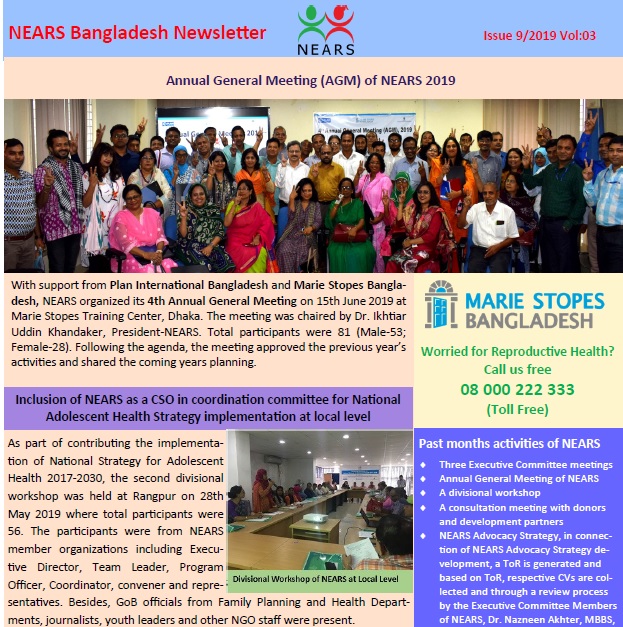 We are very glad to inform you that the Third issue of NEARS E-Newsletter is attached herewith. Follow the link below to get the newsletter:
NEARS_Newsletter_Vol3
We are very glad to inform you that the Third issue of NEARS E-Newsletter is attached herewith. Follow the link below to get the newsletter:
NEARS_Newsletter_Vol3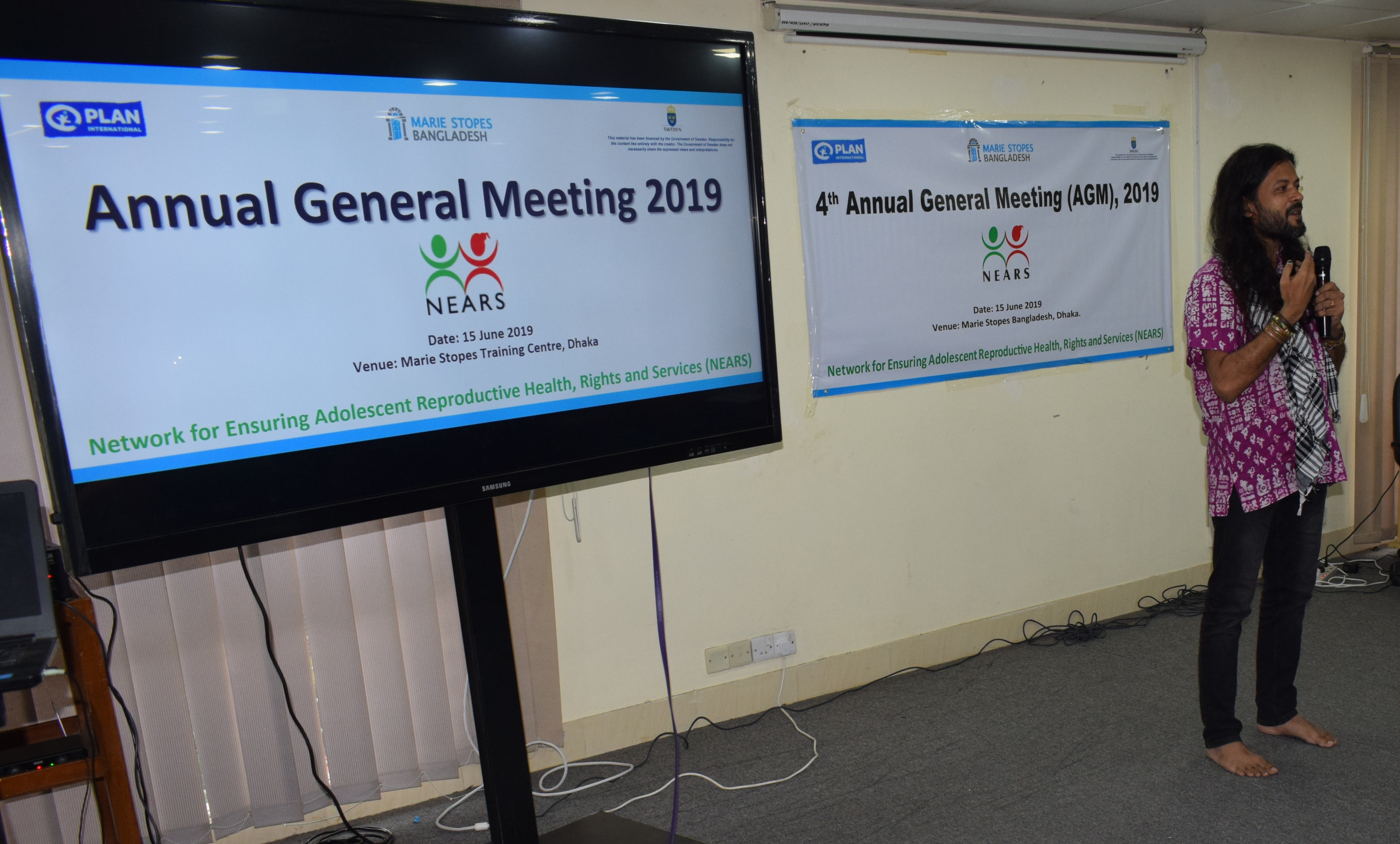 The Fourth Annual General Meeting of NEARS was held on 15th June 2019 at Marie Stopes Bangladesh Training Center, Dhaka.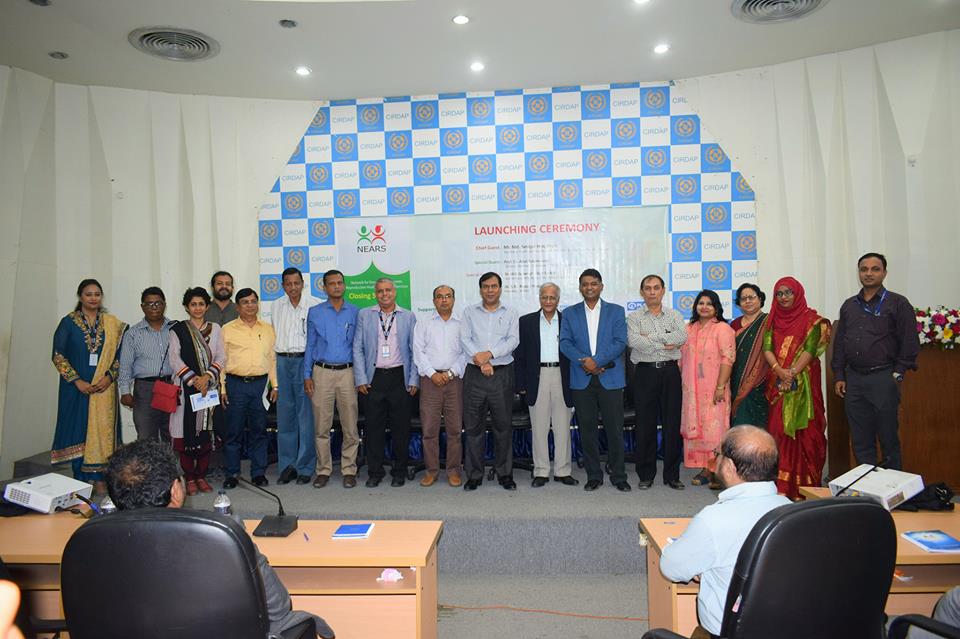
NEARS officially launched on 21st November 2017 at CIRDAP International Conference center.

 Information about member organizations